by Ma Muktananda | Apr 16, 2025
“Playing the victim is a subtle form of evasion that drains psychic energy and diminishes the capacity for action. It is a tacit renunciation of responsibility for one’s own existence, transferring the cause of everything that happens to the external environment. Those who adopt this position settle into a passive wait: for others to change, for the past to be rectified or for the future to resolve what still hurts. None of these expectations materializes until an inner decision is made that marks a turning point: abandoning the narrative of powerlessness. Recognizing that there are losses, failures or injustices is not the same as nullifying their weight, but it does require preventing them from becoming identity. The wounds may be real, although perpetuating them as the core of the self is equivalent to stopping the vital process. The trap of victimhood consists of transforming suffering into justification and complaint into refuge. Thus, pain, instead of being a stage to go through, becomes an argument for inertia.
Every time someone says “this happened to me and that’s why I can’t”, they give power to that which hurt them. They lock themselves into a narrative that immobilizes them, that offers no path to transformation. The possibility of overcoming arises when the perspective changes: the axis is no longer the past cause, but the present action. This reorientation enables new ways of inhabiting time. Regaining responsibility does not imply self-incrimination, but rather affirming oneself as a subject capable of responding, even in adverse conditions.
Those who assume their responsibilities —their choices, their actions, their paths— begin to inhabit their lives from a position of agency. They do not need a clear path to move forward. They understand that mistakes are not a definitive downfall, but an opportunity for learning and reconfiguration. They recognize that the transition to a fuller existence requires commitment, sustained effort and the clear acceptance of difficulty as a constitutive part of human development.
The habit of adopting the role of victim can offer temporary relief, but over time it paralyzes. In contrast, the active disposition of those who take responsibility generates movement and openness, even in the midst of pain. Choosing not to occupy that role does not imply denying suffering, but rejecting subordination to its effects. It is to affirm with determination: this happened, but it does not limit what I can build.
Only by ceasing the search for culprits and by assuming the place one inhabits in the present, is it possible to recover the power to decide. In that silent, yet radical act, an authentic form of freedom is initiated. Transformation does not come from outside; it begins when the narrative that reduces the subject to the conditions they have gone through is interrupted, and one clearly chooses to act responsibly.”
by Ma Muktananda | Apr 6, 2025
“Life has a greatness that often goes unnoticed. To be able to open our eyes, feel the sunlight on our face and the breeze caressing our skin is, in itself, an affirmation of meaning. Every moment we live is a gift, and deserves to be lived with gratitude.
What makes life worthwhile is not the absence of problems, but our ability to retain meaning even in the midst of chaos. Every day is a new opportunity, unique and unrepeatable, a possibility that many no longer have. That’s why we shouldn’t waste it. Even so, there are those who live as if time were guaranteed. They forget that life is fragile, and when that awareness is lost, so is our direction. We all go through moments that shake us. But that doesn’t mean we should give up. No one has to give up who they are because of external pressure. In difficult times, the most important thing is to return to our center. It’s not always easy, but when you do, everything changes. Meaning is not found by running away from problems, it is built up by facing them.
I started teaching yoga to a very small group, just nine students. At the time, the income I generated was barely enough to pay the rent, the electricity and the telephone. I remember losing twenty-five kilos in a month, simply because I didn’t have money to eat. It wasn’t until I was able to organize my first retreat that I earned enough to afford a full meal, in complete solitude but with peace of mind and dignity.
Life is not built on comfort. It is formed in struggle, in effort. Even when everything seems uncertain, dignity can be sustained if there is a clear purpose.
Living also involves losing, changing, adapting. Pain does not have to destroy us. It can help us to reorganize ourselves. Even if everything seems to be closed off, there is always room to move forward. It is not necessary to control everything, it is enough to act clearly on what does depend on us.
Those who are guided by their own convictions do not bow down to those who try to devalue them. Nobody can tell you who you are. You can rebuild yourself, even after the blow. Overcoming those voices that tried to destroy you is an act of strength and personal sovereignty. So don’t let fear, excuses or doubt decide for you. True freedom begins when you choose to take responsibility for your own path.
Life is not something that happens: it is something that is being built. It is not shaped by chance, it is shaped by your will. Only when you recognize yourself as the protagonist does time become destiny and your life a true work of art.”
Prabhuji.
by Ma Muktananda | Apr 3, 2025
As long as human beings continue to prioritize comfort over their essential needs, there will be no real possibility of transformation. Nor will they be able to develop inwardly if their will is subject to whim and not based on solid convictions. To change implies rigorously reviewing one’s own system of priorities, breaking with the inertia of procrastination and seriously assuming the commitment to live according to what is recognized as necessary and possible.
A life with direction cannot be built on ephemeral foundations. When the conscience surrenders to the transitory, all existential construction is exposed to fragility. Reorienting the course of life requires honest inner listening, sustained by silence, lucid observation and a compassionate disposition towards oneself. In this process, personal forgiveness should not be reduced to a verbal expression: only coherence between what is recognized and what is acted upon allows for the opening of a horizon of transformation. Consequently, it is urgent to assume the implications of living unaware of one’s own abilities.
Authentic transformation requires an ethical commitment to oneself. Holding on to limiting beliefs inhibits personal development. Postponing decisions has irreparable consequences; therefore, the necessary change should not be put off. Replacing passing desires with firm convictions provides stability and direction. These require discipline, perseverance and the will to resist one’s own evasions. Only concrete action interrupts the sterile cycle of procrastination.
Persevering in the face of difficulty is an act of dignity. Hope is not based on results, but on the continuity of effort. In the face of emotional fluctuation, it is discipline — and not motivation — that sustains commitment. Taking action reestablishes the link with reality and breaks the deadlock. Although the effort is not always pleasant, it is indispensable. Turning desire into duty is a sign of maturity. Overcoming oneself cannot be delegated or postponed indefinitely.
All genuine change involves sacrifice. Reflective solitude helps to clarify the course and to free oneself from the desire for approval. Even mistakes, if faced with clarity, can become a guide. Falling is part of the process, but repeating without learning leads to frustration. It is not so much the fall that matters as the ability to get up with integrity. Personal growth can make those around uncomfortable, but should not be conditioned by their judgment. Perseverance provides direction and consistency. Although it is not always immediately recognized, all authentic transformation is validated by time. Taking action opens paths and inspires. The strength built along the way allows one to sustain oneself in the face of adversity. Therefore, postponing the beginning makes no sense. The time is now.
Prabhuji
by Ma Muktananda | Apr 3, 2025
Those who hurt others often do not fully perceive the damage they cause. Even without explicit intention, they leave a mark that endures. However, I bear no grudge against those who have hurt me. On the contrary, I bless them with conviction. This is not a rhetorical formula, but a sincere acknowledgement: their presence in my history, although adverse, has contributed to my development. It was in those difficult moments that I learned to pray, and in prayer I discovered guidance and meaning. I understood that adapting does not imply giving up, but continuity in another form. Each vital fracture became raw material for a new construction. Instead of responding with aggression or violence, I chose to do so from a transformative place. That exercise revealed resources to me that I was unaware of: compassion, firmness, courage, resilience, strength.
Forgiving is not a favor to the other person, it is an act of respect for oneself. Holding on to resentment requires an energy that, over time, becomes corrosive. Reliving the wound repeatedly offers no protection: it tires and weakens. Forgiving does not mean forgetting, it implies restoring inner balance and freeing oneself from the weight that prevents progress.
Time is a limited resource. Spending it feeding anger impoverishes it. Therefore, learning to do without resentment is a genuine expression of strength. Taking away the other’s power to hurt us is an affirmation of autonomy. Not every word or every gesture should disturb one’s own stability. Excessive sensitivity to the judgment of others ends up shackling.
Regulate your expectations without losing confidence. Keeping faith is not naivety, it is a form of courage. Wounds should not determine the way we choose to love. It is necessary to leave behind that which no longer accompanies the journey. Move forward with determination. Let your actions express that, although they tried to bring you down, they did not succeed. Because those who are sustained from within do not collapse in the face of external aggression.
Those who have been blessed cannot be defeated from outside. Betrayal can present itself as victory, but it does not reach those who remain inwardly strong. That stability does not depend on external factors and cannot be destroyed from there. There are bonds with oneself that disloyalty cannot break.
Move forward. Don’t give your peace to darkening emotions. Neither hatred nor anger deserve to occupy the space where clarity, serenity and meaning could develop. It is not a question of repressing what you feel, but of allowing emotions to manifest and fade away. Don’t let them take root where calm can still flourish, where peace is possible, where love awaits.
Prabhuji
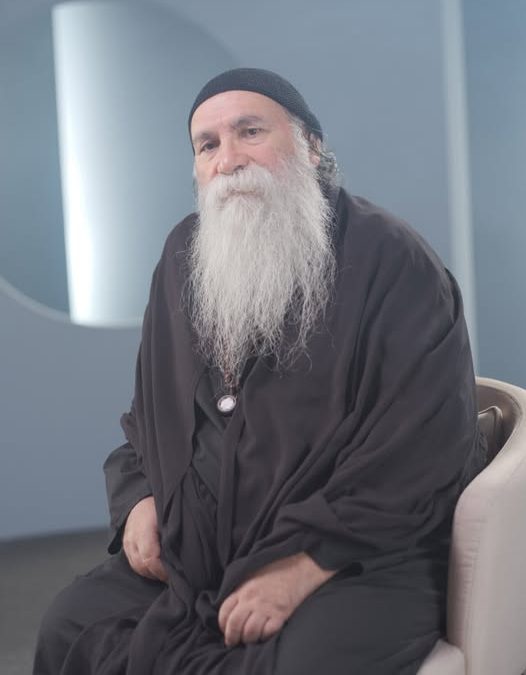
by Ma Muktananda | Apr 2, 2025
I have lived through situations that can shake even the strongest people. I have heard words that, far from consoling me, left me exposed, defenceless. And yes, I have also been betrayed, just at those moments when I was most loyal, most genuine. But, in spite of everything, I am still here. And it is not out of stubbornness or a refusal to acknowledge what hurts. It is because, despite the damage, I still choose to love, to serve, to be present, to inspire and to accompany.
In life everything changes, sometimes without warning. Clinging to the static is not only useless, it is also exhausting. What resists change ends up breaking. Even the most solid, over time, yields to water or light. That is why I believe that living with openness, with a willingness to learn and to move with what comes, is not a luxury or a secondary option: it is a vital necessity. Accepting challenges as part of the journey allows us to transform pain into something that teaches us. Adapting does not mean getting lost, but growing in new directions. Every wound, every loss, every break-up shapes us. If we don’t avoid or deny them, if we go through them with honesty, they can teach us who we are and what the meaning is of what we are doing here.
I’m not saying that pain is easy. But I do believe it can show us different ways of looking at things. Compassion, for example, does not appear by chance. It is born of having truly experienced the human condition, with all that that implies. And from there, a silent responsibility appears: to be available to others. Not because we should, but because we understand that we are all connected. Even when life hurts, there is something that remains: the dignity of being human. And that is not a naive illusion. It is a conscious choice. It is deciding, time and time again, to bet on what is worthwhile: on love, care, connection. In a world that never stops moving, holding on to that becomes a form of resistance. A way of saying: I’m still here, I still believe. Because even when everything seems to be falling apart, there is still a chance to get back up.
Prabhuji

Recent Comments