
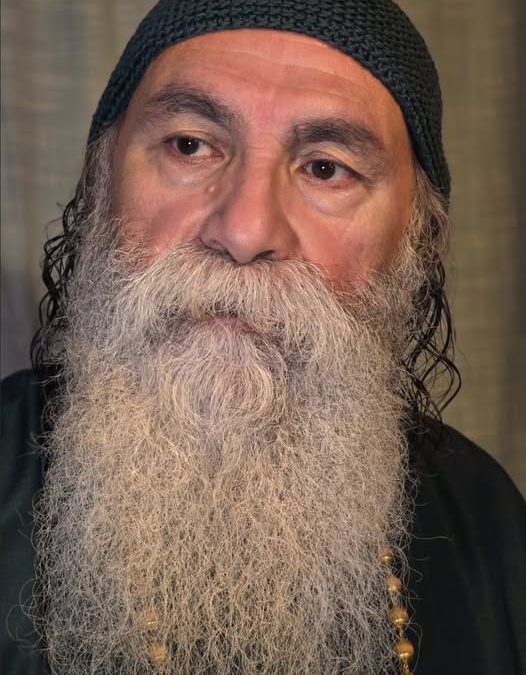
Buddha, Rumi, Rabbi Akiva, Mahavira, Shankara…
“The crowd is rarely interested in the truth. The masses eagerly seek a stable form of tranquility. The public does not want reality to intrude on their lives; they want their routine to remain intact. There is no impulse toward the unknown, only a need for confirmation. That is why, when a figure who has crossed the threshold of collective slumber emerges—a Master like Buddha, Rumi, Rabbi Akiva, Mahavira, Shankara, or any individual whose very presence disrupts the consensus—they are not welcomed as a blessing. They are perceived as a crack. It is not what they say that disturbs, but what they represent. Their mere presence, without preaching or convincing, embodies a living alternative. That is why they make people uncomfortable and why they hurt. A true Master is a mirror without mercy or distortion, and few can tolerate seeing themselves without the relief of justifications.
The reaction to such a presence is not uniform. It responds to the degree of cultural elaboration of the context in which it appears. In societies where latent violence predominates, it is suppressed, eliminated. The elimination of the body seems to offer, illusorily, the relief of having dispelled the threat. In more refined environments, a seemingly opposite but functionally analogous gesture is resorted to: religious worship. Turning the other into a sacred object based on tradition is not homage, but displacement. They are venerated so as not to have to listen to them. They are turned into myths so as not to confront the possibility that their example might challenge our lives. The altar thus fulfills a function of closure: it creates a distance that guarantees immunity. The candles do not illuminate, they obscure. The chants, instead of accompanying, cover up.
Both the crucifixion of Christ and the sanctification of Buddha are not contradictory gestures. They are modulations of the same negation. Both operations preserve the continuity of the common order. Because if Jesus does not pretend, then the rest of us do. And if Buddha is right, our usual structure of thought—time, identity, suffering—is shaken. The mere possibility that his word is valid destabilizes more than any external threat. That is why the functional option is chosen: to suppress or to consecrate. Both options allow the persistence of the identical.
Over time, this logic has become entrenched. It has become a cultural habit. Whenever a consciousness emerges that exceeds the margins, it is designated as an exception. It is presented as an admirable phenomenon, albeit irreproducible. This nullifies its contagious force. What could have been a call becomes an object of contemplation. The gesture that seemed like recognition is, in reality, neutralization. Because truth does not burst forth as a rarity: it does so as a demand. It does not affirm structures; it cracks them open. It does not seek disciples; it calls on those who are willing to dissolve the simulacrum.
The awakened do not ask for allegiance or followers, nor do they create doctrines, philosophies, or theologies. They do not need institutions, organizations, or altars. They do not demand adherence. Their mere presence demands a renunciation: that which has not been lived must collapse. The presence of the enlightened Master does not demand renunciation of what has been lived, but rather that we continue to sustain the unlived life, that is, the lie, the evasion, the denied potential, the illusion, the fantasies. Their presence is a call not to prevent the collapse of the fictitious structure built to prevent awakening. That is why the true Master does not console. They do not affirm or contain. They do not sustain the imagined. He breaks, dismantles, exposes, and deconstructs. And therein lies his power.
The question, therefore, is not whether one can accept this truth. The real dilemma is whether there is anyone willing to let themselves be swept away by it. Not as self-flagellation, but as the only way to access reality.”
Prabhuji
Recent Comments